
Most people don’t catch a septic problem early. They catch it when the toilet gurgles after a load of laundry, or when they walk out to the yard and find a wet, foul-smelling patch that hasn’t dried in three days. By then, the tank has usually been struggling for a while.
If that’s where you are now, take a breath. An overflow is messy and unpleasant, but it’s very often fixable, and what you do in the first few hours matters more than most people realize.
Do This Right Now
Start by keeping people and pets away from the wet area. Sewage carries bacteria like E. coli, and a dog that laps up a puddle or a kid who runs through it can end up seriously sick. If you’re on a private well, treat the water with extra suspicion until the system has been checked.
Next, stop sending water down the drains. Everything you run, from the dishwasher to the shower, ends up in the same tank that’s already full. Hold off on laundry. Flush only when you really have to. Even a day of cutting back can keep sewage from backing up into the house while you wait for help.
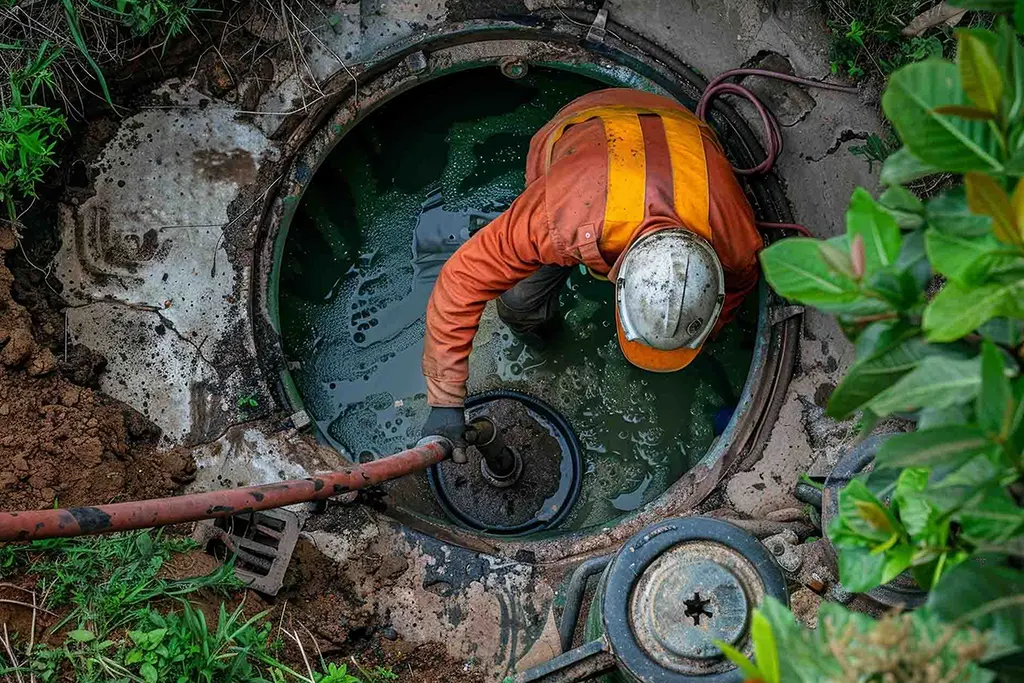
And please, leave the tank lid alone. The gases inside, mainly methane and hydrogen sulfide, can knock a person out in seconds. Every year people are hurt or killed leaning over open tanks, and some of them were trying to help someone else. Opening and septic system is a job for a trained crew with the right equipment.
One more thing: don’t dump drain cleaner or bacteria additives into the system hoping to fix it. They won’t clear a full tank, and strong chemicals can kill off the bacteria that do the real work.
Then call a licensed septicservice company. Today, not next week.
Why Septic Tanks Overflow
Knowing the cause helps you understand the estimate you’re about to get. In my experience, it almost always comes down to one of a handful of things.
The simplest is a tank that’s overdue for pumping. Solids settle to the bottom over the years, and once that layer climbs high enough, the waste has nowhere to go. A family of four with a 1,000-gallon tank usually needs a pump-out every three to five years. Plenty of homeownersgo many yearswithout realizing it, especially if they bought the house and never got a service record.
Then there’s the drain field, the area of buried pipe where treated water soaks into the soil. When it clogs with grease, fine solids, or the slimy bacterial layer that builds up over time, water can’t drain, so it rises to the surface. This is the problem nobody wants to hear about, because it’s the expensive one.
Smaller failures cause overflows too. A blocked outlet filter, a collapsed baffle, or a cracked pipe can mimic a full tank. Tree roots are a frequent offender. They’ll push straight through a joint in search of moisture, and a mature maple or willow near the lines can do real damage.
Heavy rain plays a part as well. If the ground is soaked, the drain field can’t take on any more water, and, even a healthy system will back up. When it only happens after a storm and clears up a few days later, that’s usually the weather. If it keeps happening, the system has a weakness that the rain is exposing.
Finally, what goes down the drain makes a difference. Baby wipes, “flushable” wipes, paper towels, cooking grease, and cigarette butts don’t break down the way toilet paper does. They accumulate and cause blockages in the septic tank.
What the Septic Contractor Will Do
A reputable company will start by asking questions: when you first noticed the problem, whether water is coming up indoors, when the tank was last pumped. If you don’t know that last date, it’s fine to say so.
On site, they’ll usually pump the tank, then look inside for cracks, check the baffles and pipes, and inspect the drain field for standing water or soggy soil. You should get a straight explanation of what they found. If someone gives you vague answers or pushes a big job without showing you the problem, get a second opinion.
If sewage has reached a stream, ditch, or well, tell them. Some areas require the local health department to be notified.
Septic Tank Repair, or Start Over?
This is the question everyone ends up asking, and the answer depends entirely on what failed.
Septic tank repair covers the smaller stuff, such as damaged baffles, a broken inlet or outlet pipe, a clogged filter, root intrusion, or a pump that’s failed in a system that uses one. These jobs are often quick and don’t cost anywhere near what people fear. Fixing them early is almost always cheaper than waiting.
Septic system repair on the drain field is a different story. Sometimes a field can be rested, cleaned, or partly rebuilt, especially if only one section has failed. But if the soil is saturated across most of the field, patching may only buy you a year or two.
A new septic installation usually comes into play when the tank itself is cracked or has collapsed, when the field is beyond saving, or when the whole system is old and keeps breaking down. Concrete tanks can last 40 years or more, but drain fields often give out sooner, somewhere in the 20 to 30 year range depending on soil and use. If you’re paying for repairs every year or two, a replacement may cost less over time.
There’s an upside to starting fresh, too. A new system can be sized for the people actually living in the house. A lot of overflows come from tanks that were never big enough for the family using them.
Whichever way it goes, ask for options in writing, with prices side by side. A fair contractor won’t mind.
Keeping It From Happening Again
A few habits make a big difference. Get the tank pumped on a regular schedule, and write the date down somewhere you’ll find it. Spread laundry across the week instead of washing six loads on Saturday. Fix leaky toilets and dripping faucets, since a running toilet can send hundreds of gallons into the tank each day. Keep cars and heavy equipment off the drain field, and don’t plant trees nearby. Flush toilet paper and nothing else.
None of it is complicated. It just takes consistency.
Frequently Asked Questions
Is an overflowing septic tank an emergency?
Yes. Sewage is a health hazard, and it doesn’t clear up on its own. Cut back on water use and call a professional as soon as you can.
Can I keep using my toilets and sinks?
Use as little water as possible. Anything you add to a full tank can push sewage into your home.
How much does septic tank repair cost?
It varies a lot. A baffle or filter fix is a fraction of what drain field work costs, and a full septic installation is the biggest expense. Get a written estimate after an inspection.
How often should I pump my septic tank?
Every three to five years is the usual guideline, though tank size, household size, and water use can shift that.
Will the problem go away once the rain stops?
It might, if the ground was just saturated. But if you smell sewage or it happens again, have the system inspected.